
Best Medicine for Gas & Indigestion

Best Medicine for Gas and Indigestion (And Why It Keeps Coming Back Anyway)
You reach or the Digene strip in your desk drawer around 3 PM most days now. It’s become routine almost automatic, right between your second coffee and the client call you’re dreading.
It works, mostly. For an hour, maybe two.
Then the bloating’s back by evening, right on schedule.
If this sounds familiar, you’re not doing anything wrong with the medication. Antacids and gas relief tablets are built for exactly what they treat a single flare, a specific trigger, a bad lunch.
What they were never built to do is explain why your gut has been misbehaving on a loop for the past six months.
Practitioner Fathima at Qi Balance sees this pattern constantly among Bellandur and Whitefield professionals. Daily antacid use, masking a digestive pattern that pulse and tongue analysis picks up almost immediately.
Irregular meal timing. Chronic low-grade stress. Stagnant digestion that never fully resets between meals. A proper digestive treatment plan starts by mapping which of these is actually driving your symptoms, instead of guessing from the symptom alone.
Let’s go through what the medicine cabinet actually offers, then what’s usually missing from it.
What's the Best OTC Medicine for Gas and Indigestion?
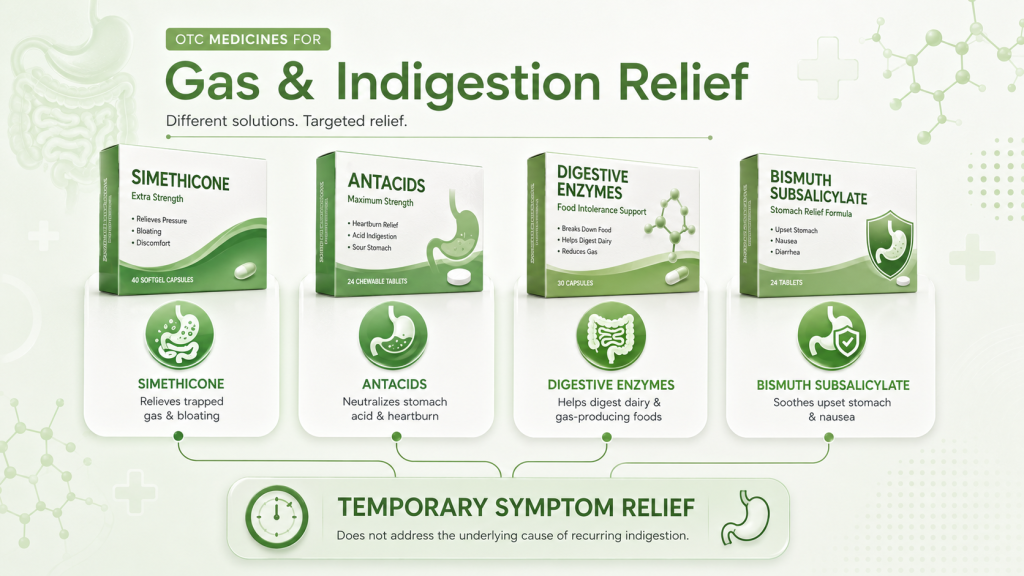
There isn’t one universal “best” option among indigestion remedies the right one depends on your specific symptom. Simethicone breaks up trapped gas bubbles for bloating. Antacids neutralize stomach acid for heartburn and sour stomach. Digestive enzymes help process specific foods like dairy or beans. Bismuth subsalicylate coats the stomach lining for general upset and nausea.
A quick, honest note here: none of these change why your gut reacts this way in the first place. They manage the flare. That’s a legitimate use nobody needs a root cause consultation for a one-off bad lunch. It’s the daily strip in the drawer pattern that’s worth a second look.
Why Desk Job Indigestion Keeps Recurring (The Part Most Articles Skip)
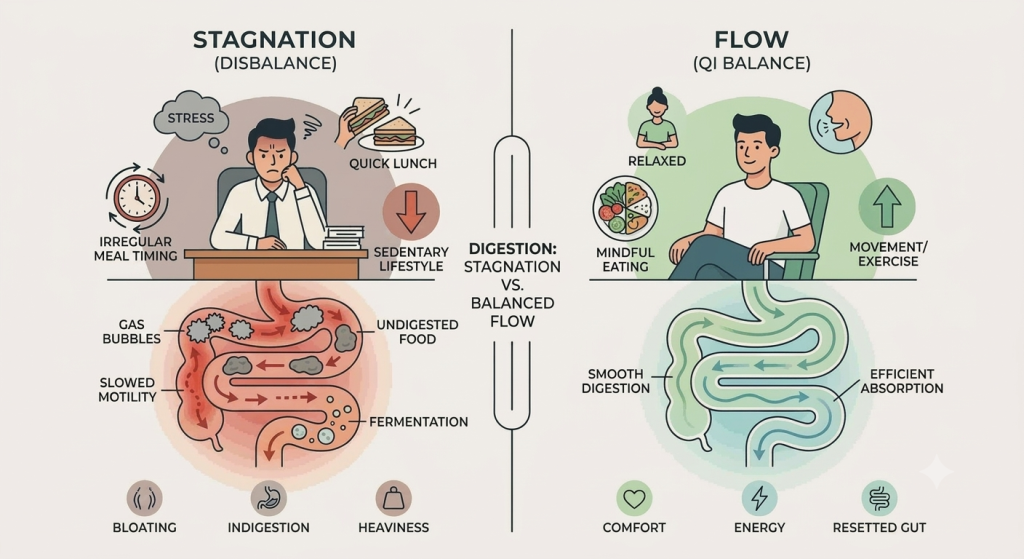
Recurring gas and indigestion in desk-bound professionals is commonly driven by three overlapping factors eating lunch at your desk under time pressure, irregular meal timing between back-to-back meetings, and chronic stress that slows digestive function directly. Fixing the trigger food rarely helps if these three patterns stay in place.
Eating Under Pressure, Literally
Wolfing down lunch between calls means you’re not chewing properly and you’re often eating in a mild stress state. Digestion actually starts in the mouth inadequate chewing means your stomach has to work harder on food that’s already poorly broken down, which is a direct, mechanical contributor to gas.
The 2 PM Meeting That Ate Your Lunch Slot
Skipping meals or pushing lunch to 3 PM because “the call ran long” disrupts your gut’s natural rhythm. Digestive enzymes and acid production follow a schedule your body expects. Break that schedule often enough, and bloating becomes a default state rather than an occasional visitor.
Stress Slows Digestion Not Metaphorically, Physically
Under stress, your body prioritizes blood flow toward muscles, away from digestive organs. Gut motility slows. Fermentation of undigested food in the intestines increases. This is a documented physiological response, not something you can eat your way around with the right supplement.
If your indigestion pattern matches your meeting calendar more than your diet, the fix isn’t a different tablet. It’s addressing the routine underneath it.
Natural vs. Pharmaceutical: What Root Cause Support Actually Adds
Pharmaceutical options relieve symptoms within minutes but reset to zero once the medication wears off. Root cause approaches like acupressure and targeted digestive assessment work on a different timeline slower to show results, but aimed at the underlying stagnation pattern rather than the symptom in front of you.
This isn’t an either/or. Keep the Digene in your drawer for the genuinely bad days. But if you’re reaching for it most afternoons, that’s a signal worth acting on rather than medicating through indefinitely.
At Qi Balance, this starts with the same diagnostic Fathima uses for every patient a pulse and tongue reading to map where digestive stagnation is actually sitting, rather than guessing from symptoms alone. From there, sessions are built around the specific pattern found, often paired with customized pain management support for patients whose indigestion arrives bundled with the tension headaches and lower back tightness that chronic desk stress tends to produce alongside it.
chronic gut inflammation and joint inflammation aren’t unrelated systems patients managing both digestive flare ups and joint stiffness are often dealing with a shared inflammatory pattern. If that sounds familiar, the clinic’s rheumatoid arthritis and joint pain program addresses that overlap directly rather than treating the gut and the joints as separate problems.
For indigestion and bloating that’s become a near daily pattern rather than an occasional flare, the clinic’s dedicated digestive treatment program is built specifically around identifying what’s driving the recurrence meal timing, stress load, or a stagnation pattern that diet changes alone haven’t touched.
The Neighborhood Advantage: Relief That Fits Between Meetings
Bangalore traffic makes “just see a gastroenterologist” easier said than done when you’ve got a 6 PM standup and a commute from Bellandur ahead of you. A Marathahalli based clinic means an actual assessment fits into a lunch hour instead of eating into a half day of leave.
Qi Balance runs 100% sterile, non invasive protocols, with every session starting from the same place Fathima’s pulse and tongue reading, mapped against your actual symptom pattern rather than a one size fits all digestive plan. If antacids have become part of your daily routine rather than an occasional fix, that’s worth a proper look.
Book a root-cause digestive assessment with Practitioner Fathima and find out what’s actually driving the pattern.
Root-Cause Digestive Care at Qi Balance
- Pulse & Tongue Analysis
- Non-Invasive Protocols
- Personalized Treatment Plans
- Convenient Marathahalli Location
- Tailored for Busy Professionals
If antacids have become a daily desk drawer routine rather than an occasional fix, it’s time to look beyond temporary relief. At Qi Balance, Practitioner Fathima combines traditional pulse and tongue diagnostic assessment with 100% sterile, non invasive protocols to address the underlying stress load, irregular meal timing, and digestive stagnation driving your recurring bloating and indigestion. Instead of guessing from symptoms alone, we map the exact pattern keeping your gut out of sync.
“Antacids put out today’s fire, but root-cause care fixes the underlying routine. True digestive health isn’t about masking the symptom it’s about restoring your body’s natural flow.”
Conclusion
Antacids, simethicone, and enzymes all have a place. For the occasional bad lunch, they work exactly as intended.
The problem starts when one of them becomes a daily ritual instead of a backup plan. That’s less a medication problem and more a sign that meal timing, stress load, or a deeper stagnation pattern needs an actual look not another tablet.
If your bloating relief keeps being temporary, that pattern is the real conversation to have. With a doctor, if symptoms are severe or persistent. Alongside root cause digestive support, if stress and routine seem to be the bigger drivers. Qi Balance exists for exactly that gap pairing proper diagnosis with non-invasive, ongoing support for Bangalore’s always-on professionals.
Medicine for Gas and Indigestion FAQ
Frequently Asked Questions
Occasional antacid use is generally considered safe for most people, but daily, long term use can mask an underlying acid reflux pattern that deserves a proper look, and certain antacids can interfere with how other medications are absorbed. If you're reaching for antacids most days, it's worth discussing with a doctor or exploring what's driving the frequency.
Gas medicine like simethicone specifically targets trapped air bubbles causing bloating and pressure, while indigestion medicine like antacids targets excess stomach acid causing burning and discomfort. They address different mechanisms, which is why taking the wrong one for your symptom often doesn't help much.
Simethicone breaks up existing gas bubbles but doesn't reduce how much gas your digestive system produces going forward, so if the underlying cause diet, eating pace, stress, or meal timing hasn't changed, the bloating typically returns. This is the most common reason people feel like OTC gas relief only "half works."
Yes. Stress redirects blood flow away from digestive organs and slows gut motility directly, which increases fermentation of food in the intestines and produces more gas, independent of what you actually ate. This is why symptoms often worsen during high-pressure work periods even when your diet stays consistent.
See a doctor if symptoms last more than two weeks, occur several times a week, or come with unintended weight loss, blood in stool, or severe pain these warrant proper medical evaluation rather than continued self medication. Occasional, mild gas and indigestion tied to an identifiable trigger is generally fine to manage with OTC options.



One Response