
Acupressure Points for Sciatica: Effective Points for Pain Relief
What Is Sciatica, Briefly
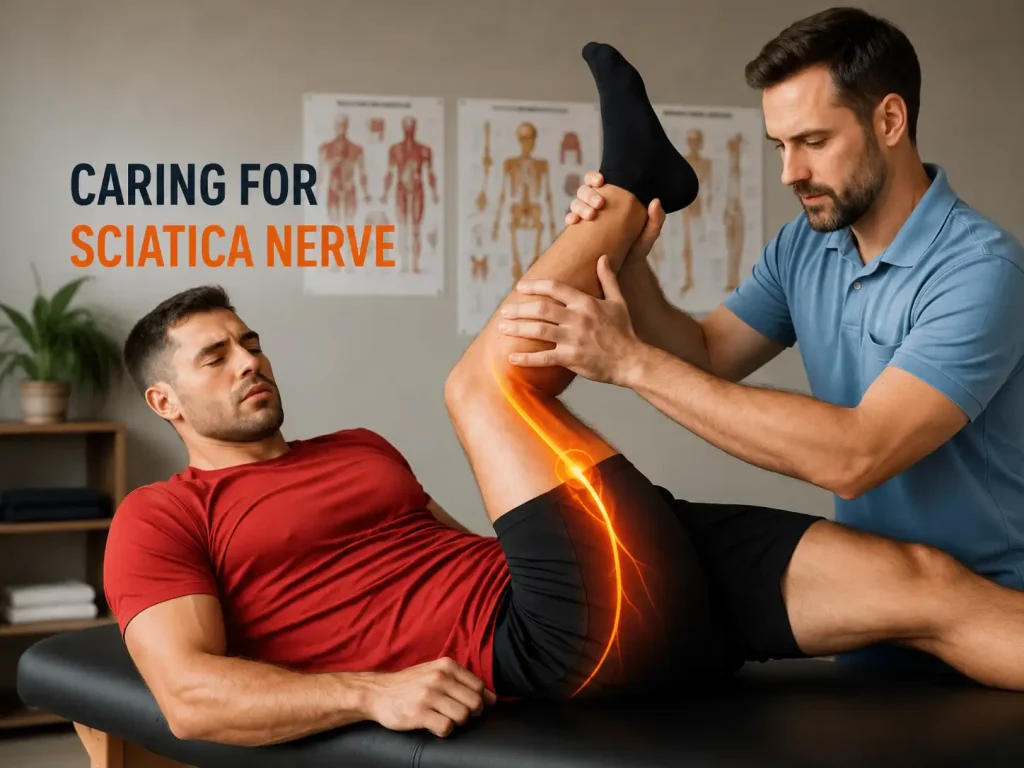
Sciatica isn’t a condition on its own — it’s a symptom. It happens when the sciatic nerve, the longest nerve in your body, running from your lower back through your hips and down each leg, gets irritated or compressed. This is often caused by a herniated disc, spinal stenosis, muscle tightness (particularly in the piriformis muscle), or prolonged poor posture from long hours of sitting.
The result is usually a combination of shooting pain, numbness, tingling, or muscle weakness that travels along the path of the nerve — sometimes just in the lower back and buttock, sometimes all the way down to the foot.
Understanding the 3 Key Acupressure Points for Sciatica
- GB30 (Huantiao) – Targets hip and buttock tension linked to sciatic discomfort.
- BL40 (Weizhong) – Commonly used for lower back and radiating leg pain.
- GB34 (Yanglingquan) – Helps address muscle tension, cramping, and leg stiffness.
Key Acupressure Points for Sciatica
Acupressure works by applying firm, steady pressure to specific points connected to the body’s meridians — the same pathways used in acupuncture, minus the needles. For sciatica, the points below are commonly targeted because they sit along or near the path of the sciatic nerve and the muscles that tend to compress it, Since sciatic pain frequently radiates down into the leg and foot, many patients also benefit from the clinic’s pain management program in Bangalore, which looks at the body’s pain patterns as a whole rather than treating a single point in isolation.
Point | Location | How It May Help |
|---|---|---|
GB30 (Huantiao) | Center of the buttock, at the hip joint | Considered one of the most important points for sciatica; may help release deep hip and buttock tension |
BL40 (Weizhong) | Back of the knee, center of the crease | Often used for lower back and leg pain along the nerve pathway |
BL60 (Kunlun) | Outer ankle, between the ankle bone and Achilles tendon | May support pain relief along the lower leg and heel |
GB34 (Yanglingquan) | Below the knee, at the head of the fibula | Commonly used for muscle tension, cramping, and leg stiffness |
BL23 (Shenshu) | Lower back, beside the spine at waist level | Associated with lower back support and kidney-related energy in TCM |
GV3 (Yaoyangguan) | Lower back, between the spinous processes at hip level | Often used to ease lower back stiffness that radiates into the legs |
How to Use These Points Safely
Self-applied acupressure can be a reasonable first step for mild sciatic discomfort, but technique matters.
- Use your thumb or knuckle to apply firm, steady pressure — not sharp jabs.
- Hold each point for roughly 30 to 60 seconds, breathing slowly and evenly.
- Pressure should feel like a firm, slightly uncomfortable ache, never sharp or unbearable pain.
- Avoid pressing directly onto swollen, bruised, or broken skin.
- Combine acupressure with gentle stretching for the piriformis and hamstrings, since tight muscles often contribute to nerve compression.
- Stop immediately if a point triggers numbness, tingling that worsens, or intense pain rather than relief.
Self-massage can ease day-to-day discomfort, but it doesn’t replace a proper assessment of what’s actually causing your sciatica in the first place. Where lower leg and foot circulation are part of the picture, foot reflexology is sometimes recommended as a supportive addition to the overall plan.
Acupressure vs Acupuncture for Sciatica
Factor | Acupressure | Acupuncture |
|---|---|---|
Method | Manual pressure using fingers, thumbs, or knuckles | Fine, sterile needles inserted at specific points |
Who can do it | Can be self-administered at home | Requires a trained, licensed practitioner |
Depth of effect | Generally more surface-level muscle and tension relief | May reach deeper into nervous system pain regulation |
Best for | Mild, everyday tension and temporary flare-ups | Moderate to persistent sciatic pain, root-cause treatment |
Cost and access | Free, can be done anywhere | Requires clinic visits and sessions |
Precision | Broader area, less targeted | Highly targeted to specific points and depth |
Many patients use both — acupressure for daily maintenance between sessions, and acupuncture for more targeted, professional treatment of the underlying issue.
“Relief can begin with the right pressure point, but lasting recovery starts with understanding the cause.”
Fathima
Qibalance Founder
What Does Research Say?
Evidence specifically on acupressure for sciatica is still fairly limited compared to research on acupuncture or general low back pain, so it helps to look at the broader picture.
Several small studies referenced on PubMed have examined acupressure for lower back pain and sciatic-type symptoms, generally reporting short-term improvements in pain intensity and muscle tension, though sample sizes are often small and more high-quality research is needed.
The NCCIH notes that acupressure, like acupuncture, may help with certain types of musculoskeletal pain by influencing the nervous system’s pain response, while also cautioning that evidence quality varies and results are not consistent across all studies.
Reviews associated with Cochrane on manual therapies for low back and radiating leg pain suggest that pressure-based techniques may offer modest, short-term relief, particularly when combined with stretching, posture correction, and other conservative treatments — rather than as a standalone solution.
The WHO and NICE both recognize acupuncture and related pressure-based therapies as reasonable options within a broader, multi-modal approach to chronic low back pain, generally recommending they be used alongside — not instead of — appropriate medical evaluation, especially when nerve compression is involved.
The honest summary: acupressure may offer real, if modest and often temporary, relief for sciatica-related muscle tension and discomfort. It is not a substitute for identifying and treating the underlying cause, particularly when a disc issue or nerve compression is involved.
Benefits of Acupressure for Sciatica
- May offer temporary relief from muscle tension along the sciatic nerve pathway
- Can be self-administered at home, at no cost
- Generally low risk when done correctly
- May help reduce reliance on pain medication for mild flare-ups
- Can be combined with stretching, posture correction, and professional treatment
- Often useful as a quick, accessible option during a workday flare-up
Who Should Consider It
Acupressure may be a reasonable option if you:
- Experience mild, occasional sciatic discomfort, especially after long hours of sitting
- Want a free, accessible way to ease tension between professional treatment sessions
- Have already been evaluated by a doctor and cleared for self-massage techniques
- Are an office worker or IT professional dealing with posture-related lower back and leg tension
- Prefer starting with a low-risk, natural approach before considering other therapies
Who Should Avoid It
You should be cautious or avoid self-applied acupressure if you:
- Have significant numbness, tingling, or weakness in the leg or foot
- Have a diagnosed herniated disc, spinal stenosis, or other structural spine issue without medical clearance
- Are pregnant, particularly around lower back and hip points, without professional guidance
- Have a bleeding disorder or fragile skin in the area
- Notice symptoms worsening rather than improving with pressure
If in doubt, it’s best to have a practitioner assess the correct points and pressure for your specific case.
The Qi Balance Treatment Approach
At Qi Balance Natural Healing Center in Marathahalli, sciatica is never treated as a one-size-fits-all problem. Every patient begins with a thorough assessment, including pulse diagnosis and tongue analysis, to understand the underlying pattern contributing to nerve irritation — whether that’s muscle tightness, poor circulation, or long-standing postural strain from desk work.
From there, treatment is built around the individual. This often includes targeted acupuncture at points along the sciatic nerve pathway, sometimes combined with cupping therapy to release deep muscle tension in the lower back and hips.
For patients whose sciatica is tied to broader nerve or joint discomfort, the same root-cause philosophy used in the clinic’s approach to acupuncture for frozen shoulder applies here too — identifying what’s really driving the pain before deciding how to treat it.
Qi Balance does not present acupressure or acupuncture as a cure for sciatica. They’re offered as part of a broader, individualized approach — one that many office workers and IT professionals across Marathahalli and Bangalore use to manage nerve-related pain more naturally, alongside any medical treatment already in place.
Conclusion
Acupressure points for sciatica can be a genuinely useful tool — something you can turn to at your desk, on the drive home, or before bed when that familiar ache starts creeping down your leg. Points like GB30, BL40, and GB34 are widely used for a reason, and for many people, they offer real, if temporary, relief from tension along the sciatic nerve.
But it’s worth being honest about what acupressure can and can’t do. It can ease discomfort. It can’t diagnose a herniated disc, and it won’t fix a structural issue that needs proper treatment. If your sciatica keeps coming back, or if it’s paired with numbness, weakness, or pain that’s getting worse rather than better, that’s your sign to get a proper assessment rather than keep pressing the same points and hoping.
Qi Balance in Marathahalli offers individualized evaluations, including pulse diagnosis and tongue analysis, to understand what’s actually driving your sciatic pain before recommending a treatment plan. If you’d like to explore a more targeted, professional approach, you can learn more about their acupuncture therapy services in Bangalore.
Share This :
Acupressure for sciatica FAQ
Frequently Asked Questions About acupressure for sciatica
GB30 (Huantiao), located at the center of the buttock, is often considered the single most important point for sciatica, since it sits directly over the area where the sciatic nerve exits the hip. It's frequently combined with BL40 behind the knee for fuller relief.
Some people notice a reduction in tension within minutes of applying pressure, though full relief usually requires consistent use over several days or weeks. Results vary depending on the underlying cause of the sciatica.
Yes, for most people, using these points once or twice daily is generally considered safe. However, if pain worsens or new symptoms appear, it's best to stop and consult a healthcare provider or licensed practitioner.
Acupuncture is generally considered more targeted and may reach deeper levels of pain regulation, since it uses needles rather than manual pressure. Acupressure can still help with milder, everyday tension, especially as a self-care tool between sessions.
Some pregnancy-related sciatica may respond to gentle acupressure, but certain points are generally avoided during pregnancy. It's important to consult both your doctor and a qualified practitioner before trying acupressure while pregnant.